
Painesville Previous Residents Sources
Different sources cover different portions of an address trail. Begin with the current parcel and legal description, then select the next source by date. A Recorder deed provides a party and an instrument reference. A directory gives a printed listing for one edition. A map can establish a building or block context. Probate and obituary material can add an event or relationship lead. None should be stretched beyond its purpose.
| Source | Years | Where Held | What It Shows |
|---|---|---|---|
| Lake County Recorder deed books | From April 16, 1840 | Recorder Records Room and historical repositories | Recorded ownership and instrument chain |
| Recorder online index and images | Index from 1986; images from 1990 | AVA basic search, Laredo Select, Recorder channels | Index entries, references, and available images |
| Painesville and area directories | 1895 onward in uneven local runs | Morley Library | Dated name and printed-address snapshots |
| Haines criss-cross directories | 1976, 1977, 1981-1987, 1989, 1991-present | Morley Library | Available address-to-printed-name listings |
| Federal census | Released through 1950 as of 2026 | National Archives and library resources | Household composition at a decennial date |
| 1904 Sanborn and city records | August 1904 map; permit range not published | Library of Congress; City request channels | Building context or retained work and planning chronology |
For a recent ownership interval, the Recorder and Auditor are the strongest opening pair. For an earlier address or a question about who lived there before, add the closest Morley directory and released census. For an older property form, add maps, plats, and the legal description before deciding two addresses refer to the same location.
The Lake County Recorder is the primary custodian for the recorded land instruments behind a Painesville parcel.
The Recorder's historic books reach much farther back than its online tools, so an online cutoff is an access boundary, not the beginning of the local record trail.
Painesville PIN And Legal Description
Use the Lake County Auditor property search to preserve the parcel identification number, current situs address, owner and tax-mailing fields, legal description, subdivision or plat reference, and municipality. The PIN and legal description are the best bridge when an old deed does not use a familiar street address. The Auditor search accepts parcel ID, owner, address number and street, and postal code. Its public instructions use *Arden as an example for returning addresses on a street.
Do not equate the parcel owner or a tax-mailing field with every person who lived at the address. A mailing contact can be a post-office box or a different city. The property card identifies the parcel and its tax context. It does not serve as a full household record. Save the description before opening Recorder documents, because a common surname or repeated street name is not enough to keep a deed chain on the right parcel.
Painesville Previous Residents Deed Chain
A backward title trail follows the property, not merely the most familiar name. Start with the current parcel record and locate the current owner's purchase instrument through the Recorder. Record the party names, recording date, document number or book and page reference, document type, and legal description. Then use the transferor on that instrument as the next earlier owner candidate. Every link must match the same legal description, parcel, lot, tract, or plat reference.
- Open the Auditor record for the address and copy the PIN, legal description, plat or subdivision details, and present ownership fields.
- Use the current owner, document date, and legal description to locate the purchase deed in the Recorder index or Records Room.
- Record both sides of the instrument. The grantee received the interest; the grantor transferred it.
- Search the predecessor owner's earlier acquisition as a grantee, then compare the legal description before accepting it as the same property.
- Repeat one instrument at a time. When the online search reaches its coverage boundary, continue with the Records Room or request a copy by document reference.
- Grantor
- The party who transfers an interest in a recorded instrument.
- Grantee
- The party who receives an interest in the recorded instrument.
- Chain of title
- The documented sequence of property transfers, checked one link at a time.
- Legal description
- The lot, block, tract, subdivision, acreage, or other formal property description that ties older documents to a parcel more reliably than an address alone.
Painesville Recorder Online Boundary
Lake County's first deed is dated April 16, 1840, yet the Recorder reports its online index beginning in 1986 and online images beginning in 1990. AVA provides basic information. Laredo Select supplies advanced searching after account registration. Those systems are useful for the later portion of a title sequence, but they do not replace the earlier books or the office research route.
For material outside online coverage, visit the Records Room at 105 Main Street during the published Monday through Friday 8 a.m. to 4 p.m. hours. Staff may help a visitor conduct a search but do not perform a title search for the public. A specific document can be requested through RecorderPublicRecordRequest@LakeCountyOhio.gov, and the Recorder states that hard copies not online are $2 per page by mail with a check and self-addressed stamped envelope.
The Recorder document-types page shows why a title trail may include deeds, correction deeds, transfer-on-death documents, mortgages, releases, liens, plats, and restrictions.
Not every recorded party is a former resident. A lienholder, representative, or other recorded role needs the parcel and document context before it becomes part of an address history.
Painesville Directory Census Trail
Use directories and census records as parallel dated checks after the parcel trail identifies an interval. Morley's city-directory collections are described in detail in the Painesville historical city directory. The local sequence begins with named Painesville volumes in 1895 and includes later wider-area editions. The 1923 volume is the first local holding identified as a street-address list. Haines criss-cross volumes provide the reverse address-to-printed-name arrangement only for their actual available years.
A useful process is: address and legal description, then the nearest held directory, then the next available Haines or personal-name section, then the federal census available for the period, then obituary or probate context. Keep each date visible. A directory listing and census entry can support a household trail, but neither supplies continuous proof across the years between sources.
- Choose the Morley volume closest to the target date and capture the name and address exactly as printed.
- Use the 1923 street list only for 1923 and later stated street-list work. For a Haines year, search the available reverse section.
- Compare a released federal census at its own decennial date, allowing for surname variants and separate enumeration practices.
- Resolve a changed address with a map, plat, and legal description before attaching a name to the present property.
Note: A directory is a dated listing and a census is a decennial snapshot, so either source can be silent about a person who was present at another time.
Painesville Sanborn Map Evidence
The August 1904 Painesville Sanborn Fire Insurance Map has 18 sheets. It can establish building footprint, use, lot context, block layout, and historical street labeling for that map date. It does not name former residents. Morley also lists indexed Lake County atlases dated 1840 and 1857, giving earlier place context when paired with a deed book, plat, or recorded legal description.
Map evidence is especially useful when an old description reads as a lot, tract, or subdivision rather than a modern house number. It cannot prove that a present number existed in 1904. Compare the printed directory form, map sheet, plat volume and page, and parcel description before drawing a connection.
Painesville Address Form Caution
Address normalization needs a paper trail of its own. Painesville records can contain a historic street form, a current situs, a route-style mailing form, a lot and block description, a postal label, or a township reference. The City keeps special ordinance tables for street-name changes, street and alley vacations, dedication and plat approval, street grades, annexation and detachment, and zoning-map changes. Those categories show that records exist. They do not establish a universal old-to-new address conversion.
No authoritative source in the local research identified a citywide Painesville renumbering program or complete street-name crosswalk. Record the historic address exactly, search variant forms separately, and identify the relevant ordinance only after it is found and read. A Painesville postal address can also sit outside the City boundary, so the Auditor municipality field and mapped parcel should be checked before a City permit or planning request is sent.
Painesville Permit Date Evidence
Community Development can hold zoning permits, building-related applications, code cases, planning material, Board of Zoning Appeals packets, and 311-related work records tied to an address. The City did not expose a public historic address-permit search screen. A focused Painesville public-record request is the supported route: identify the address, a date range, and the record type, such as a permit log, permit application, inspection disposition, or code-enforcement correspondence.
Community Development is at 66 Mentor Avenue, and the City lists Code Enforcement, Building, Planning and Zoning at 440-392-5931. A retained permit or planning record can date work or add an applicant or property context. It is not a substitute for a deed and should not be treated as proof of an entire household history. The relevant custodian can change when the mapped parcel is outside the City despite using a Painesville postal address.
Painesville Probate Obituary Context
When a past resident or owner died, probate and obituary sources can supply an event date, a court case, or a relationship lead. Lake County Probate Court handles estates, guardianships, marriage records, and forms. Estate files may identify heirs, fiduciaries, beneficiaries, and property references, but a filing should be read as a court record and not assumed to establish a current address. The court is at 25 North Park Place in Painesville, with a general telephone number of 440-350-2626.
Lake County Probate Court provides the court's case-search and records access path.
A probate entry becomes more useful when its property reference, date, and party names are checked against the Recorder deed chain.
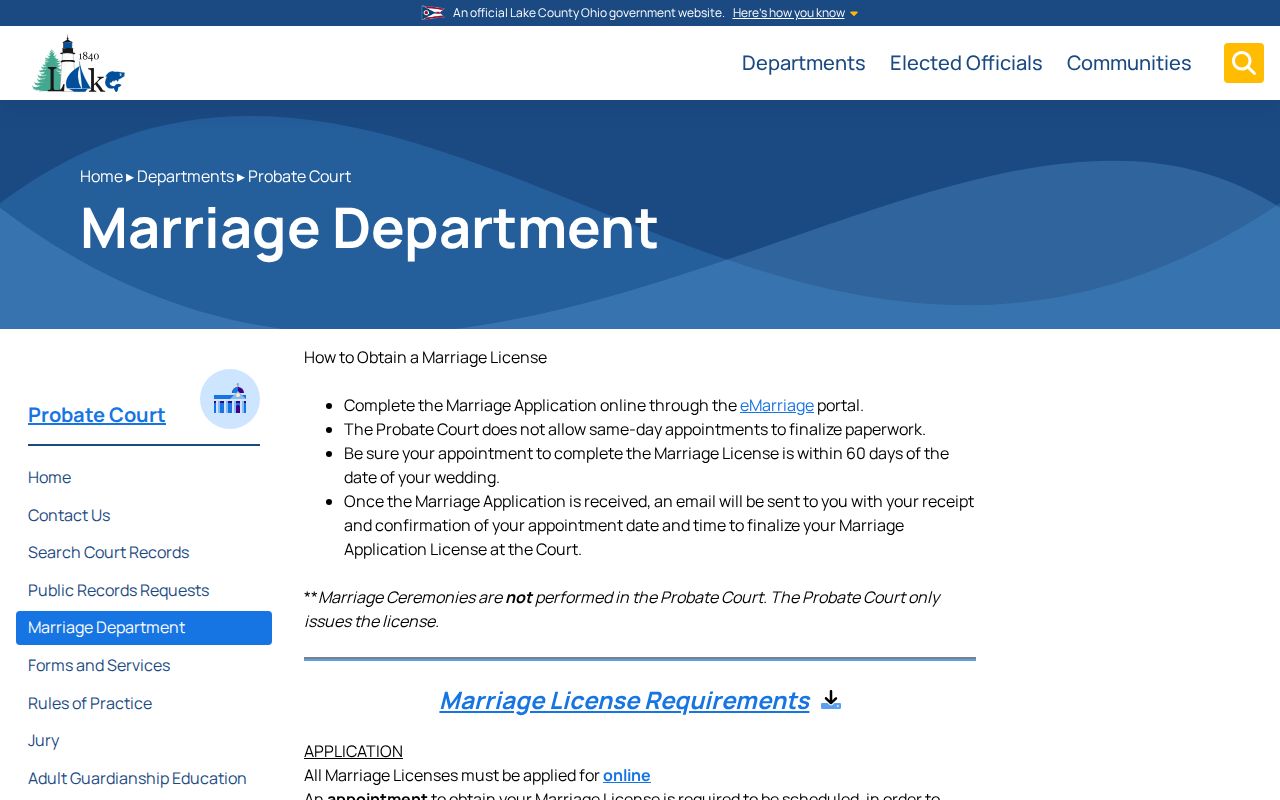
Marriage records can also supply a date-specific family context through the Probate Court's separate Marriage Department. They should be requested and interpreted under the court's access rules, rather than treated as a property record.
The Probate Marriage Department describes the marriage application and copy route.
Morley's obituary index, cemetery sources, and probate records can close or test a dated address trail, while each remains a separate kind of evidence.
Painesville Previous Residents Limits
The prior-resident trail is for family history, estate questions, property history, civic research, and personal curiosity. It must keep source limits visible: ownership is not a full household roster, a directory listing is not proof of an uninterrupted stay, and a map is not a legal survey. Safe at Home, confidential voter fields, court restrictions, sensitive vital-record sections, and other legal protections can limit what is available.
Lawful use. Use Painesville address history for legitimate personal or historical research. Do not use records to harass, threaten, or track any person, and do not try to bypass protected-address or restricted-record safeguards.